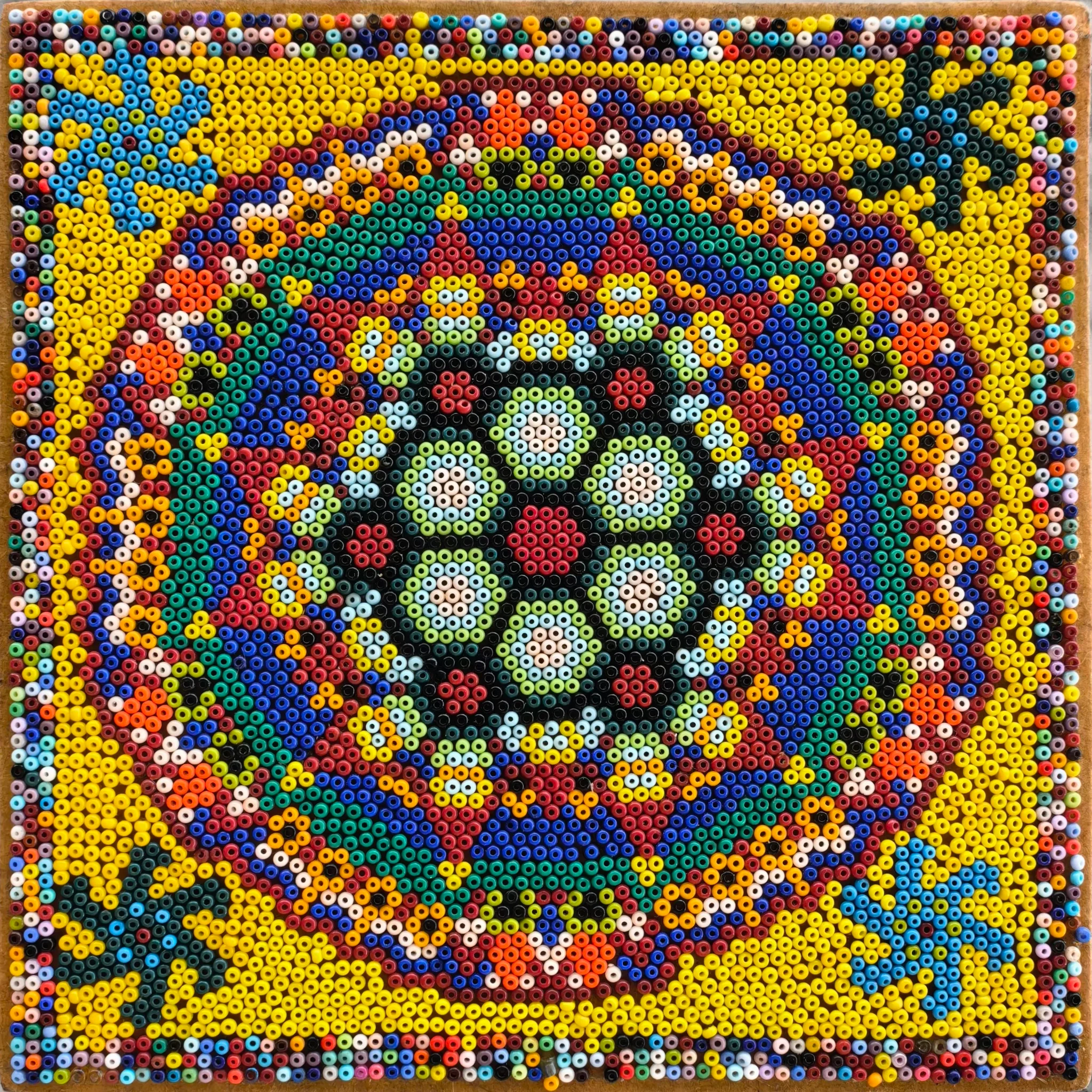
La flor del peyote o hikuri
Santos Motoapohua de la Torre (1942–)
Beads, beeswax and plywood · 15 × 15 cm
The back is inscribed and signed: "La flor del peyote o hikuri hecho por Santos Motoaopohua de la Torre y familia" (The flower of the peyote, or hikuri, made by Santos Motoaopohua de la Torre and family).
The piece is made of flowers and peyote. "En lengua wixárika, Tuutú significa flor" (in the Wixárika language, tuutú means flower), the Facebook page Orgullo Wixarika explains, and for its people a flower "es ofrenda, mensaje, presencia espiritual" (is an offering, a message, a spiritual presence). In Art of the Huichol Indians, the catalog of a 1978 exhibition organized by the Fine Arts Museums of San Francisco, a caption calls the toto (pronounced too-too) flower "a major Huichol design motif associated with peyote."
In the same catalog, Susan Eger writes, in her essay on Huichol women's art, that peyote is drawn more often and in more ways than anything else in Huichol art, the toto flower among them, partly because "its symmetrical, mandala-like form lends itself to artistic elaboration, especially when envisioned in the hallucinatory state."