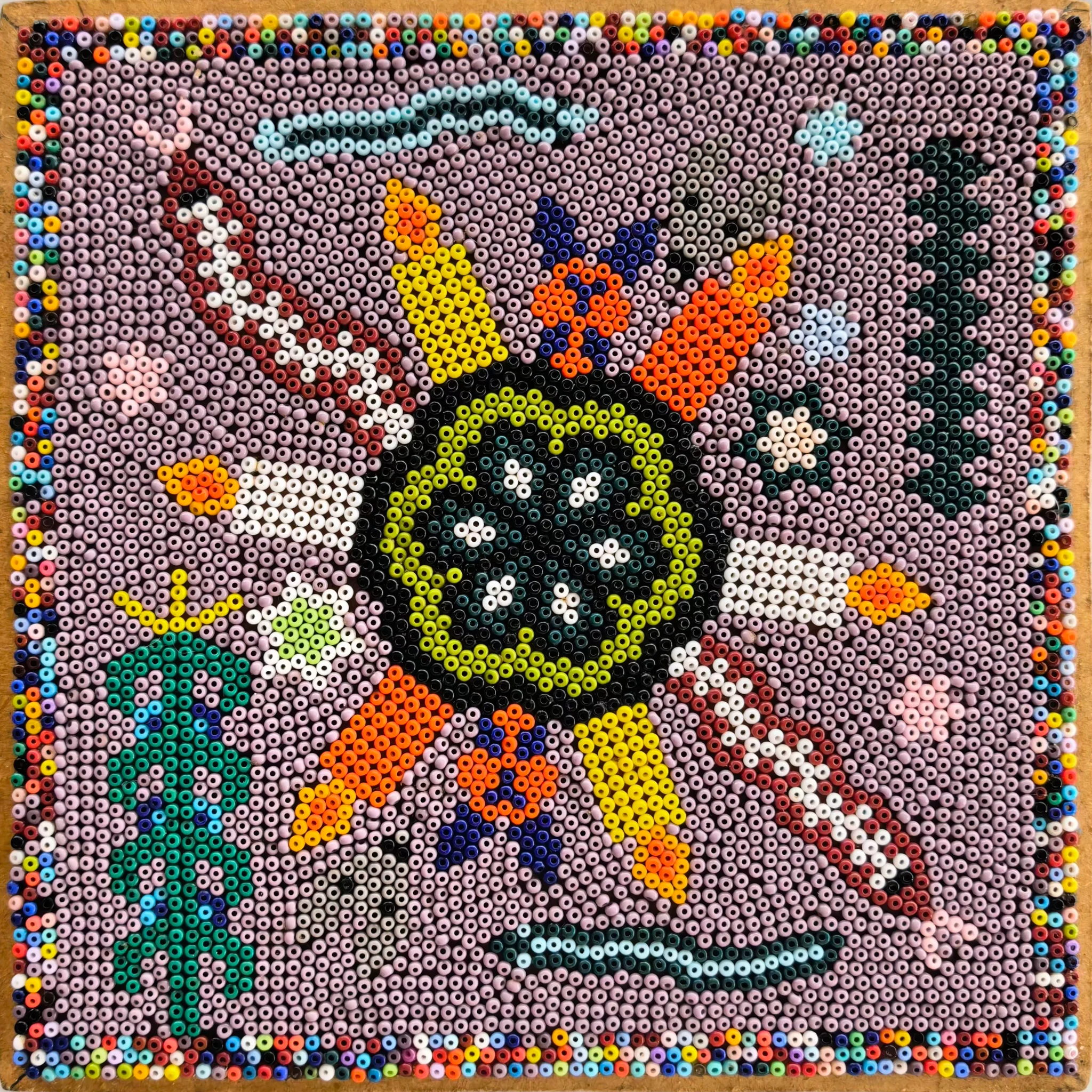
Veneración de la tierra sagrada
Santos Motoapohua de la Torre (1942–)
Beads, beeswax and plywood · 15 × 15 cm
The back is inscribed and signed: "Veneracion de la tierra sagrada hecho por Santos Motoaopohua de la Torre y familia" (Veneration of the sacred land, made by Santos Motoaopohua de la Torre and family).
The piece shows a peyote ringed by candles, with a maize plant. The Wirikuta Preservation Project writes that the Wixárika people hold Wirikuta to be the place "donde nació el sol y donde habitan sus deidades y ancestros" (where the sun was born and where their deities and ancestors dwell): "Por ello, cada elemento del desierto es sagrado" (for that reason every element of the desert is sacred).
In its guide to the Wixárika Route, Mexico's Instituto Nacional de Antropología e Historia writes that candles "representan la luz del Sol y la conexión con las deidades" (represent the light of the Sun and the connection with the deities) and are lit as offerings at the sacred sites, and that maize "representa el cuerpo y la vida del pueblo wixárika" (represents the body and the life of the Wixárika people).
Santos de la Torre, who stars in Nicolás Echevarría's documentary Eco de la montaña, spoke in it of a planned mine in Wirikuta: "La mina es como nuestro cuerpo. El oro, como la vida. La plata es como el hueso de nosotros. El agua, la sangre de nuestras venas... Está escrito que esta tierra no debe ser dañada" (The mine is like our body. The gold, like life. The silver is like our bone. The water, the blood of our veins... It is written that this land must not be harmed).